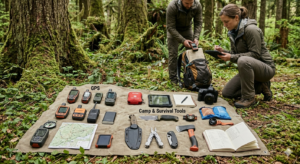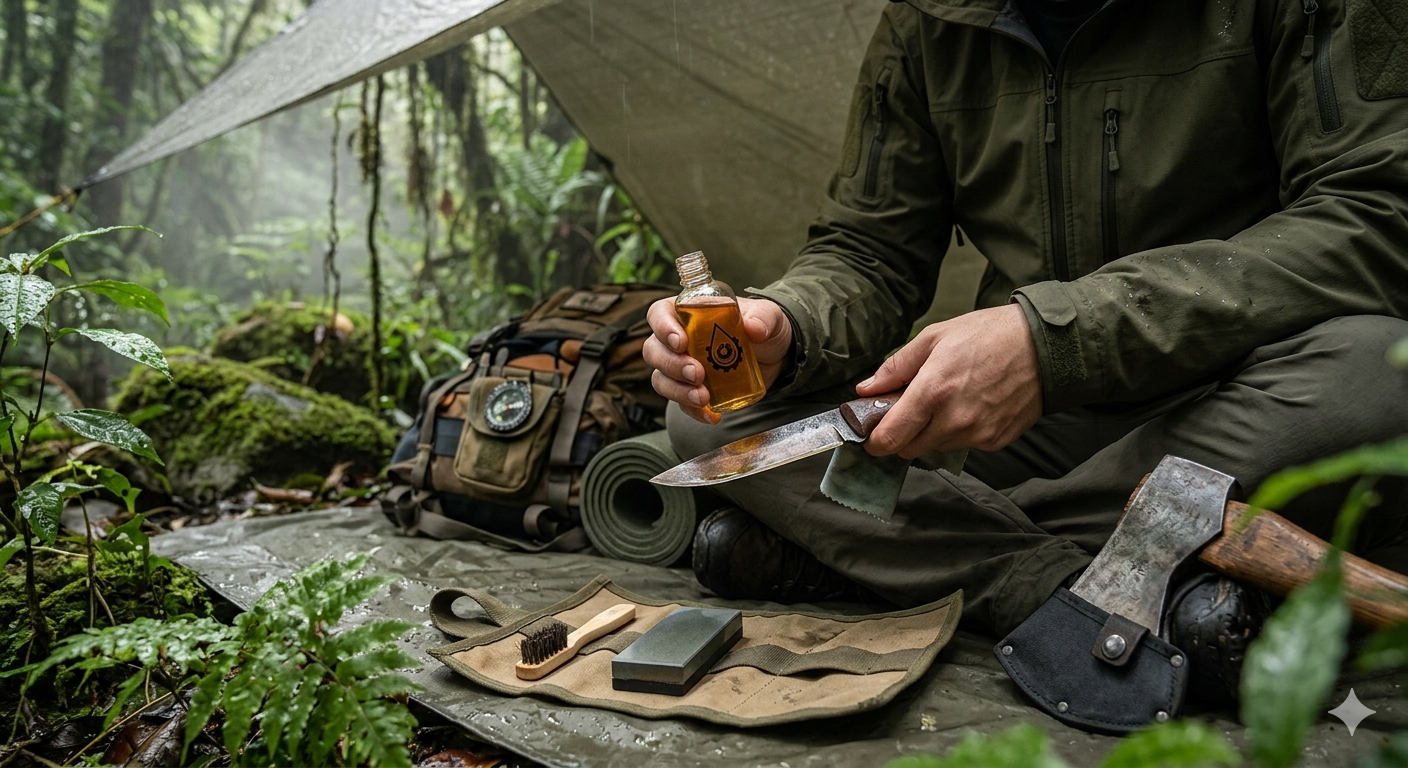

High-carbon steel tools — knives, machetes, axes — hold an edge better than stainless. But they rust faster. In humid environments, that’s not a minor inconvenience. It’s a real operational problem.
Here’s what actually works in the field.
Why Does High-Carbon Steel Rust So Fast in Humid Conditions?
High-carbon steel (typically 0.6–1.5% carbon content) corrodes faster than stainless because it lacks chromium — the element that forms a passive oxide layer on stainless alloys. Without that barrier, bare steel reacts with moisture and oxygen almost immediately. At 80%+ relative humidity, which is standard in tropical forests, coastal zones, and Pacific Northwest rainforests, surface rust can appear on an unprotected blade within 4–6 hours.
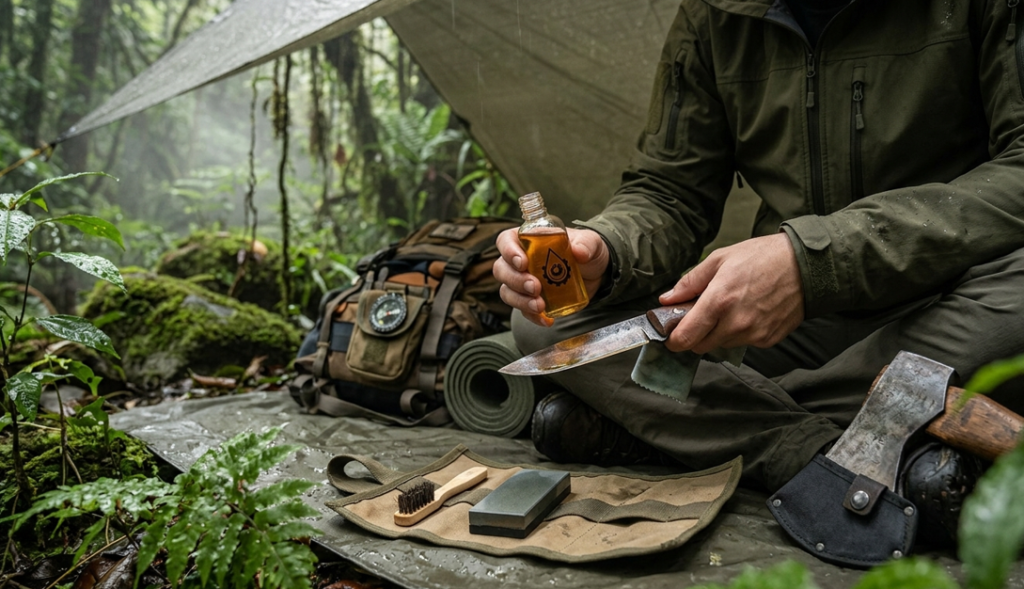
Think of it like a cast-iron skillet left wet in a sink. The chemistry is the same. The moment the protective oil layer breaks down, oxidation starts. Your blade is that skillet — except you’re using it to cut through wet vegetation all day.
Before You Leave: Preparation That Actually Matters
The best field maintenance starts at home. Arriving at the trailhead with properly prepared tools cuts your in-camp work by half.
- Apply a heavy coat of paste wax (Renaissance Wax or Johnson’s Paste Wax) to all carbon steel surfaces, including the spine and ricasso
- Treat wooden handles with linseed oil — two coats, 24 hours apart — to prevent moisture absorption that accelerates handle-to-blade corrosion
- Store tools in sheaths lined with VCI (Vapor Corrosion Inhibitor) foam or paper, which actively neutralizes corrosive vapors in enclosed spaces
- Avoid leather sheaths in prolonged humid conditions — wet leather holds moisture against the blade and accelerates pitting
One field biologist working in the Everglades for a 3-week survey switched from a leather sheath to a Kydex sheath with a VCI insert. After the trip, her carbon steel fillet knife showed zero surface rust — compared to visible pitting on the same knife after a previous 10-day trip with the leather sheath.
What Protects Best in the Field? A Direct Comparison
Different protective coatings have different trade-offs. Choosing a heavier, longer-lasting protectant means more weight and prep time. Choosing a light oil means faster application but more frequent reapplication.
| Protectant | Application Frequency | Water Resistance | Weight/Bulk | Best For |
| Mineral oil | Daily | Low | Minimal | Food-contact tools, short trips |
| Ballistol | Every 1–2 days | Medium | Minimal | General field use, multi-surface |
| Renaissance Wax | Every 3–5 days | High | Light (small tin) | Long expeditions, storage |
| Vaseline | Every 2–3 days | High | Light | Budget option, widely available |
| WD-40 | Not recommended | Very low | — | Displacement only, not protection |
WD-40 is a water displacer, not a rust preventive. Using it as your primary protectant in a rainforest is like wearing a cotton t-shirt as a rain layer — it helps for about 20 minutes.
How Do You Maintain Tools When You Have No Supplies Left?
Running low on oil by day 10 of a 14-day expedition is a real scenario. Here’s what works with what you likely already carry.
- Cooking oil (olive, coconut, vegetable) — apply a thin film after drying the blade. Not ideal long-term due to rancidity, but effective for 24–48 hours in an emergency.
- Lip balm or petroleum-based sunscreen — both create a temporary moisture barrier. Apply to clean, dry steel.
- Animal fat from camp cooking — used by hunters and trappers for generations. Effective. Smells. Works.
“The biggest mistake I see in the field is people wiping a blade dry and putting it away. Dry is not protected. A blade needs a thin oil film every single time it goes back in the sheath — especially after contact with saltwater, citrus, or blood, all of which accelerate corrosion dramatically.”
The Daily Routine That Keeps Rust Off
Consistency matters more than the product you use. A mediocre oil applied every evening beats the best wax applied once a week.
At the end of each day:
- Wipe the blade clean with a dry cloth — remove all plant sap, moisture, and debris
- If the blade contacted saltwater or acidic materials (citrus, blood), rinse with fresh water first, then dry completely
- Apply a thin, even coat of your chosen protectant — thin is key, excess oil attracts grit
- Store in a dry sheath or hang the tool where air circulates
Field reality check: In a base camp scenario during a 21-day Amazon tributary survey, a team of four naturalists tested daily oiling (Ballistol) versus oiling every three days. After three weeks, the daily-oiled tools required only light stropping to restore edge sharpness. The every-three-days tools needed 15–20 minutes of rust removal and re-profiling on a whetstone before they were field-ready again.
Does Blade Finish Affect Corrosion Resistance?
Yes — significantly. This is one of the most overlooked variables when choosing a carbon steel tool for humid environments.
- Forced patina (mustard, vinegar, or coffee patina): Creates a stable iron oxide layer that slows further oxidation. A properly developed patina reduces active rust formation by an estimated 40–60% compared to bare polished steel, according to metallurgical testing referenced by the American Bladesmith Society.
- Cerakote or powder coat: Factory-applied coatings offer strong protection but chip over hard use, leaving exposed spots that rust faster than uncoated steel.
- High-polish finish: Looks good, rusts fast. More surface area exposed, less natural oxide development.
Forcing a patina before an expedition is one of the highest-ROI prep steps you can take. Submerge the clean blade in a 50/50 white vinegar solution for 10–15 minutes, neutralize with baking soda solution, dry, and oil. The resulting gray-black layer is stable and protective.
“People obsess over which oil to use and ignore blade finish entirely. A forced patina on a carbon steel machete before a jungle expedition is worth more than any oil you’ll apply in the field. It’s the difference between managing rust and preventing it.”
Under the Surface: What Most Guides Don’t Tell You
- Salt from sweat is more corrosive to carbon steel than rainwater. Handles and the area near the guard corrode first — not the blade tip.
- Dissimilar metals in contact (brass guard + carbon steel blade) create a galvanic cell in the presence of moisture, accelerating corrosion at the junction point. Dry and oil that junction specifically.
- Carbon steel corrodes faster at higher temperatures. A blade left in a hot tent in direct sun with residual moisture will show rust in under 2 hours.
- Tannins in wood (oak, walnut) are mildly acidic and will etch an unprotected blade stored in a wooden box or against a wooden surface.
For further reading on corrosion chemistry relevant to field tools, the ASM International Handbook on Corrosion and Knife Steel Nerds (a peer-reviewed metallurgy resource) are both reliable references.
After the Expedition: Restoring and Storing
Getting home doesn’t mean the work is done. Improper storage after a humid expedition causes more long-term damage than the trip itself.
Remove all existing rust with 0000 steel wool or a rust eraser — never sandpaper, which removes too much material. Re-establish a patina if the surface was stripped. Apply a heavy coat of Renaissance Wax or a dedicated long-term protectant like Sentry Solutions TUF-GLIDE. Store in a low-humidity environment, never in a sealed case without a desiccant pack.
The tools that last decades in field collections aren’t the ones made from the best steel. They’re the ones that got consistent, unglamorous attention after every trip.