
You’re standing in a parking lot at 5 AM, headlamp on, rucksack half-packed, trying to remember if you grabbed the extra batteries. We’ve all been there. A solid gear checklist fixes that problem before it starts.
This isn’t a shopping list. It’s a working framework built around how field research actually happens — navigation first, data collection second, camp and safety third.
Navigation: Do You Really Need Both GPS and a Paper Map?
Yes. Always both.
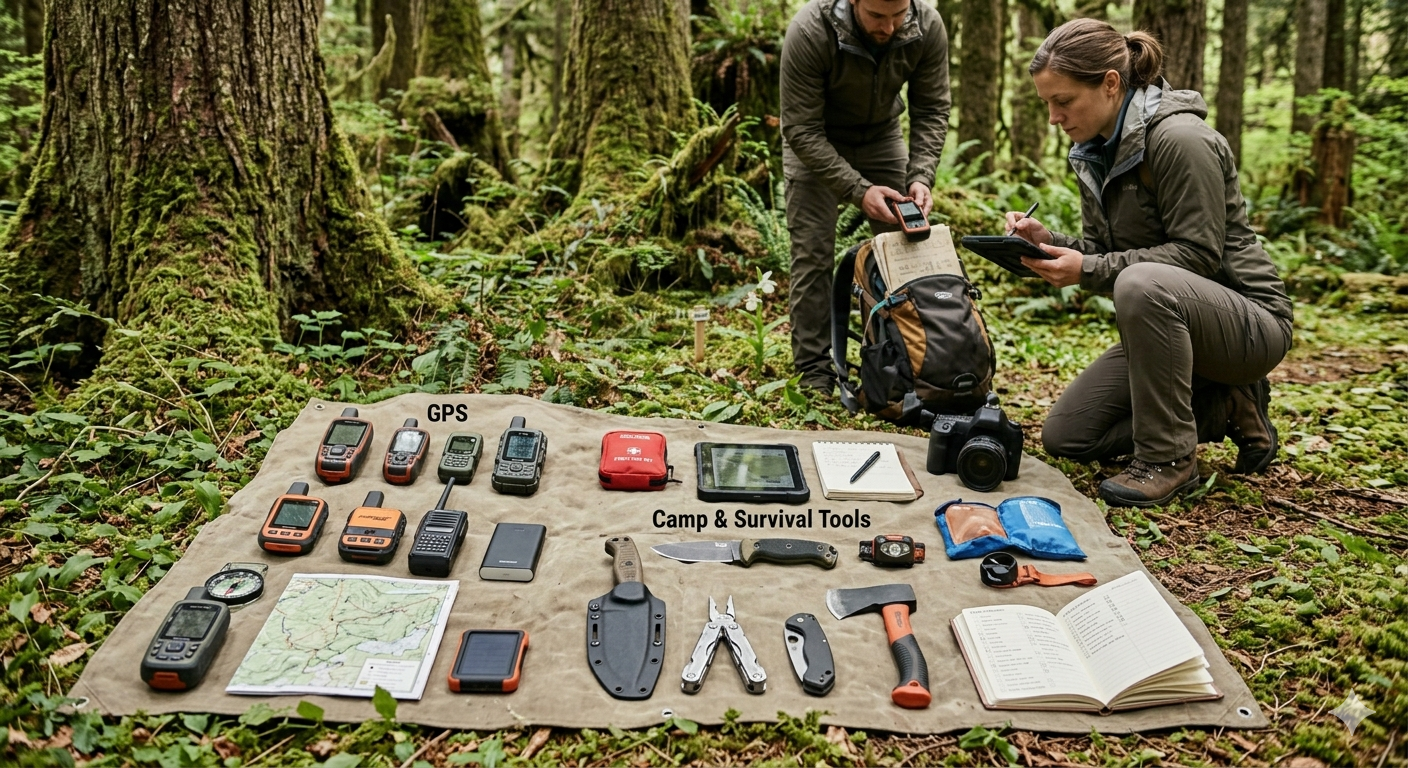
A dedicated GPS unit like the Garmin inReach Mini 2 or eTrex 32x gives you real-time tracking, waypoint logging, and — critically — two-way satellite messaging when you’re out of cell range. The inReach Mini 2 weighs 3.5 oz and can send an SOS to GEOS 24/7 monitoring. That’s not a luxury. That’s a lifeline.
But GPS batteries die. Screens crack. Firmware glitches at the worst moment. A USGS 1:24,000 topo map and a baseplate compass don’t need charging. They don’t freeze up. Learn to use them together, and you’ve built redundancy into your navigation system — the same way aircraft pilots use both autopilot and manual controls.
What to pack:
- Dedicated GPS unit with satellite messaging (Garmin inReach series)
- USGS topo map of your area (waterproofed or in a dry bag)
- Baseplate compass (Silva Ranger or Suunto A-10)
- Spare AA or AAA batteries (match your GPS model)
Data Collection Tools: What Goes in the Field Notebook?
Your field notebook is the most important piece of gear that costs under $15.
Rite in the Rain notebooks (model 374-M or 980) are waterproof, tear-resistant, and work with standard pencils in rain, mud, and cold. Pencil over pen — ink freezes below 32°F and smears when wet. A mechanical pencil with HB lead is the standard choice among wildlife biologists for exactly this reason.
For species ID, the Merlin Bird ID app (Cornell Lab of Ornithology) identifies birds by sound in real time — a genuine game-changer for birders. iNaturalist handles plants, insects, and herps with community verification. Both work offline if you download regional packs in advance.
“Download your offline maps and species ID packs before you leave the trailhead. I’ve watched researchers lose half a day’s data because they assumed they’d have signal. You won’t. Plan for zero connectivity and treat any signal you get as a bonus.”
Data collection essentials:
- Rite in the Rain notebook + mechanical pencil
- Merlin Bird ID and iNaturalist (offline packs downloaded)
- Hand lens / loupe (10x magnification minimum)
- Small sample vials and zip-lock bags for specimens
- Flagging tape for marking transects
The Knife: One Tool, Dozens of Uses
A fixed-blade knife belongs on every field researcher’s belt. Not a multi-tool as a substitute — a dedicated blade.
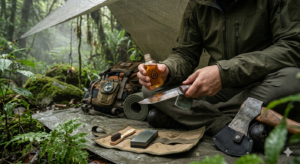
In the field, a knife cuts cordage, opens sample bags, processes food, clears brush from a transect line, and serves as an emergency tool if you need to build a shelter or signal for help. The Morakniv Companion (carbon steel, 4.1-inch blade) costs around $15 and holds an edge better than knives three times the price. The tradeoff: carbon steel rusts if you don’t dry it after use. Stainless steel is more forgiving but harder to sharpen in the field.
Choosing a fixed blade over a folding knife means sacrificing pocket convenience for structural reliability. A folder’s hinge can fail under lateral pressure. A fixed blade won’t.
GPS Tracker vs. Satellite Communicator: Which One Do You Actually Need?
| Feature | Dedicated GPS Tracker (e.g., Garmin eTrex 32x) | Satellite Communicator (e.g., Garmin inReach Mini 2) |
| Two-way messaging | No | Yes |
| SOS capability | No | Yes (GEOS monitoring) |
| Waypoint/track logging | Yes | Yes |
| Battery life | ~25 hours | ~14 days (tracking mode) |
| Subscription required | No | Yes (~$15–65/month) |
| Best for | Day hikes, data logging | Multi-day, remote expeditions |
The honest answer: if you’re going overnight or into genuinely remote terrain, the satellite communicator is worth the subscription cost. For day surveys within cell range, a GPS tracker plus your phone covers most needs.
Camp Gear: What’s the Minimum Functional Setup?
Think of your camp kit the way a surgeon thinks about a sterile field — everything has a specific function, and anything without one gets cut.
A researcher working a 3-day mammal survey in the Cascades once showed up with a 55-liter pack stuffed with “just in case” gear. By day two, he’d cached 8 lbs of unused equipment at camp because the extra weight was slowing his transect pace by roughly 20%. He covered 4 fewer kilometers per day than planned. The data gap cost him a full resample trip the following month.
Pack light. Pack intentional.
- Shelter: A single-wall bivy (SOL Escape Bivvy, 8.5 oz) or ultralight tent (Big Agnes Copper Spur HV UL2, 2 lbs 10 oz) depending on conditions.
- Sleep system: Sleeping bag rated 10°F below your expected low + sleeping pad (R-value 2+ for three-season).
- Water: Filter (Sawyer Squeeze, 3 oz) + 2L capacity minimum; iodine tablets as backup.
- Fire and light: BIC lighter + waterproof matches + headlamp (Black Diamond Spot 400, 400 lumens) + spare batteries.
- First aid: NOLS Wilderness Medicine-based kit — include blister treatment, SAM splint, and any personal medications.
“The gear people skip is always the gear they need in an emergency. A whistle, a signal mirror, and a mylar emergency blanket together weigh under 3 oz and take up less space than a granola bar. There’s no rational argument for leaving them behind.”
Bear spray (Counter Assault or UDAP, minimum 7.9 oz canister) is non-negotiable in grizzly country. In black bear territory, it’s still the fastest, most effective deterrent available — faster than any firearm in a surprise encounter at close range.
A personal locator beacon (PLB) like the ACR ResQLink 400 requires no subscription and works globally via COSPAS-SARSAT satellites. It’s a one-way SOS device, not a communicator, but it’s a solid backup if your inReach fails.
The Checklist at a Glance
Before you close this tab, run through this:
- GPS unit + topo map + compass
- Satellite communicator (for overnight/remote)
- Rite in the Rain notebook + pencil
- Species ID apps (offline packs downloaded)
- Fixed-blade knife (Morakniv or equivalent)
- Shelter + sleep system rated for conditions
- Water filter + backup purification
- Headlamp + spare batteries
- First aid kit (wilderness-grade)
- Bear spray (if applicable) + PLB or inReach
- Hand lens, sample vials, flagging tape
Every item on this list earns its weight. If something doesn’t, leave it. The best field kit is the one you actually carry — and use.For navigation standards and wilderness safety protocols, refer to the USGS National Map and the NOLS Wilderness Medicine curriculum.