
You’ve been there. You’re three miles into a trail, and the blade on your folding saw starts wobbling. Or the handle on your hatchet cracks on the second trip out. You bought it at a big-box store, it looked fine on the shelf, and now it’s dead weight in your pack — headed straight for a landfill.
This isn’t bad luck. It’s the business model.
The Real Cost of “Affordable” Gear
Mass-market tools are priced to sell, not to last. A $25 camp knife might seem like a smart buy until you’ve replaced it three times in five years. That’s $75 spent, three tools manufactured, three tools discarded.
According to the EPA, Americans generated over 292 million tons of municipal solid waste in 2018 — and consumer goods, including tools and hardware, make up a significant share. The problem isn’t just what ends up in landfills. It’s the upstream cost: raw material extraction, factory energy use, shipping emissions, packaging waste. Every replacement tool carries that full burden.
Buying cheap means paying twice. And the planet pays too.
What Makes a Handcrafted Tool Different?
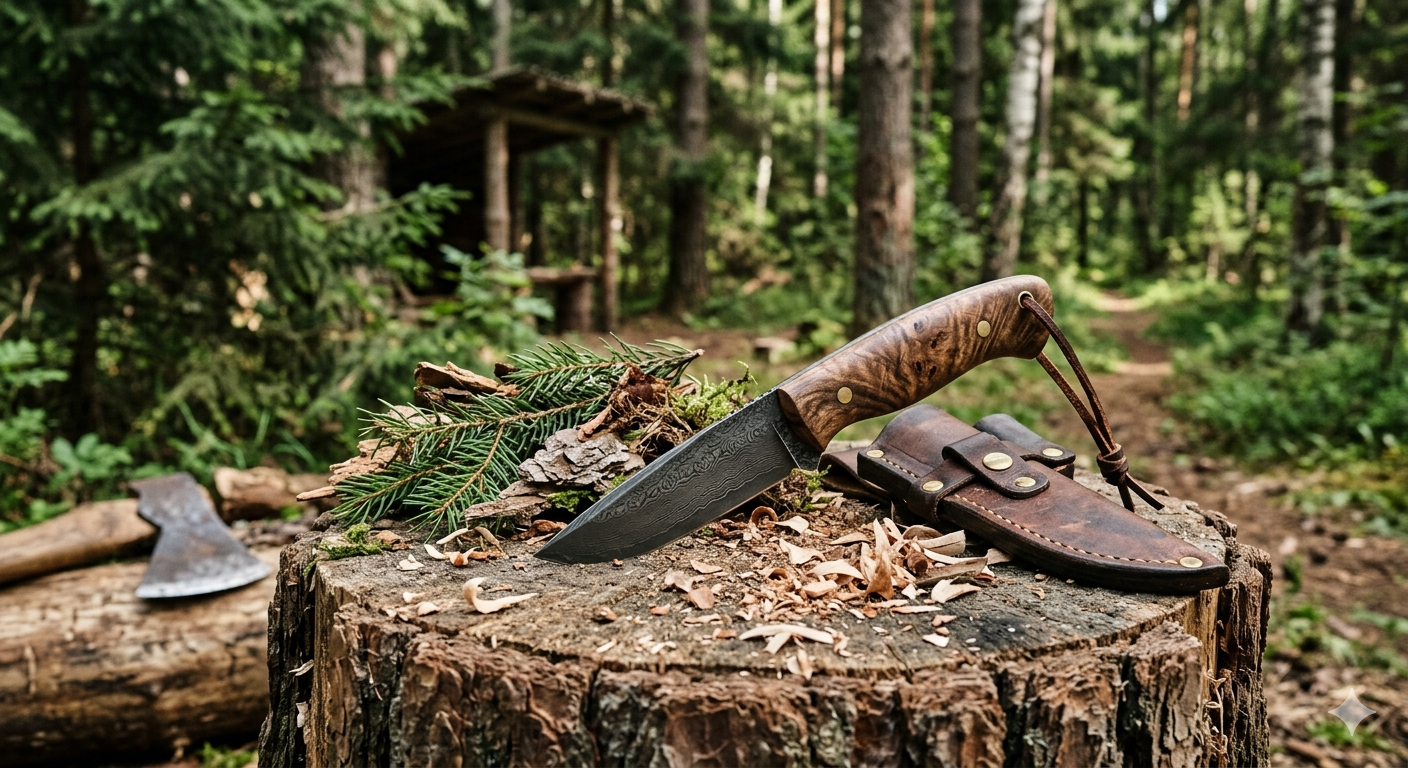
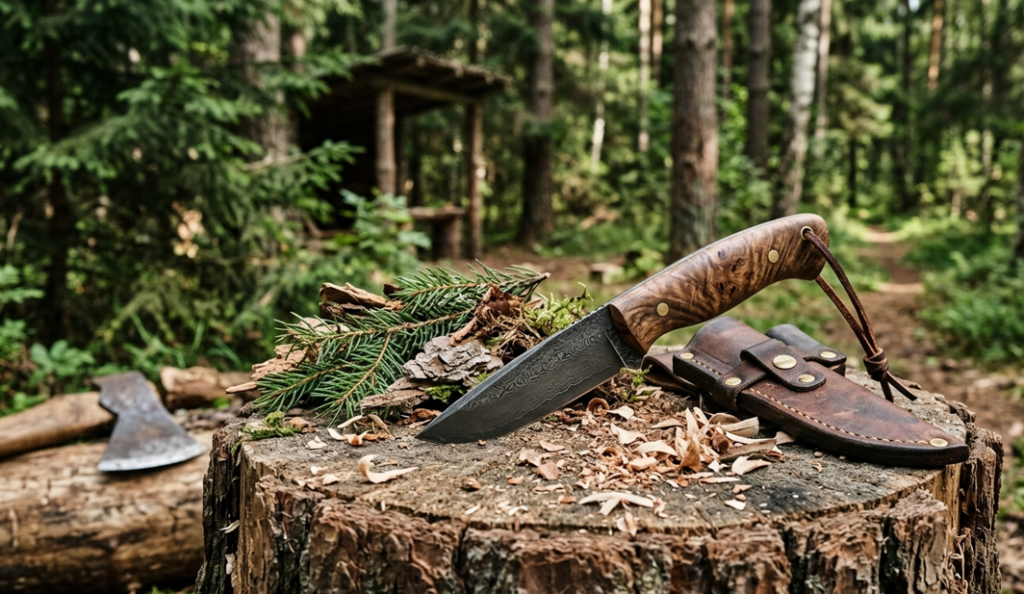
A custom hand-forged knife or a hand-stitched leather sheath isn’t made to a price point. It’s made to a standard.
The maker chooses steel for its specific properties — edge retention, toughness, corrosion resistance — not for what’s cheapest to stamp out at volume. The handle material is fitted to the blade’s balance. Every component is chosen to work together for decades, not seasons.
Think of it like a well-built wooden canoe versus an inflatable kayak. The inflatable gets you on the water fast and cheap. But after a few seasons of UV exposure, abrasion, and cold storage, it’s done. The wooden canoe, maintained properly, outlives its owner. The difference isn’t just materials — it’s the philosophy behind the object.
Does Durability Actually Reduce Environmental Impact?
Yes — and the math is straightforward.
A quality custom fixed-blade knife, made from high-carbon steel like 1084 or O1, can hold an edge for years with proper care and be resharpened hundreds of times. A mass-market stainless blade loses its edge quickly, often can’t be resharpened effectively, and gets replaced. Over a 20-year period, one custom knife replaces an estimated 6–10 mass-market equivalents.
Each mass-market knife requires roughly 0.5–1 kg of steel to produce, plus plastics for the handle, packaging, and transport. Multiply that by 8 replacements, and you’re looking at 4–8 kg of material consumed — versus one tool that stays in your kit.
That’s not a marginal difference. That’s a fundamentally different relationship with consumption.
| Factor | Mass-Market Tool | Custom Handcrafted Tool |
| Average lifespan | 1–3 years | 20–50+ years |
| Repairability | Low (often not repairable) | High (designed for maintenance) |
| Material quality | Standardized, cost-optimized | Chosen for performance and longevity |
| Replacements over 20 years | 6–10 units | 1 unit |
| End-of-life | Landfill | Resharpen, restore, or pass on |
| Total material footprint | High | Low |
The Repair Factor: Why It Matters More Than You Think
A mass-market tool breaks, and your only option is replacement. A handcrafted tool breaks — rarely — and your option is repair.
A cracked handle on a custom axe can be replaced with a new piece of hickory for a few dollars and an afternoon. A loose ferrule on a hand-forged chisel can be re-set. A worn leather wrap can be re-stitched. These aren’t heroic acts of restoration. They’re normal maintenance, the same way you oil a cast iron pan or re-sole a good pair of boots.
“When I build a knife for someone, I tell them: the only thing that should ever wear out is the edge — and that’s by design. Everything else should outlast you. If a handle cracks in ten years, bring it back. That’s not a failure. That’s a tool that’s been used.”
Repairability is the single most underrated sustainability metric in outdoor gear. It’s not glamorous. But it’s the difference between a tool that lives and one that dies.
Passing It Down: The Inheritance Model of Ownership
There’s a concept in traditional craft cultures sometimes called “legacy ownership” — the idea that a well-made object isn’t just yours, it belongs to whoever comes after you.
A custom hatchet used for 30 years of backcountry camping carries real history. It can be cleaned up, re-handled if needed, and handed to a son, daughter, or friend who will use it for another 30 years. That’s 60 years of utility from one manufactured object.
Consider what that looks like in practice: A craftsman in Vermont makes a hand-forged camp axe in 2024. It costs $280. The buyer uses it for 35 years of hunting and camping trips. He passes it to his daughter in 2059. She uses it for another 25 years. Total lifespan: 60 years. Total cost per year of use: $4.67. Total replacement tools purchased: zero.
That’s not a luxury purchase. That’s the most economical and ecological choice available.
What You’re Actually Paying For
The upfront cost of a custom tool is real. A hand-forged knife from a reputable American bladesmith runs $150–$600 depending on complexity. A mass-market equivalent might be $30–$60.
Choosing a custom tool means accepting a higher upfront cost in exchange for a dramatically lower lifetime cost and environmental footprint. The tradeoff is real: you need the capital now, and you need to trust that you’ll maintain the tool properly. If you’re the kind of person who loses gear regularly or doesn’t maintain what you own, the math changes.
But if you’re reading this, you’re probably not that person.
“The lifecycle analysis on handcrafted tools consistently shows lower total environmental impact when the tool is actually used for its full potential lifespan. The problem is that most consumers never calculate total cost of ownership — they only see the sticker price.”
Field Notes: What the Outdoor Community Already Knows
- A well-maintained carbon steel blade resharpens faster and to a keener edge than most stainless alloys
- Natural handle materials — stabilized wood, bone, antler — are renewable and biodegradable at end of life
- Custom makers in the US often source steel domestically, reducing transport emissions compared to imported mass-market goods
- Many custom toolmakers offer lifetime repair services, further extending usable life
Is a Custom Tool Right for Every Situation?
Not necessarily. A $400 custom knife doesn’t make sense for a casual weekend camper who goes out twice a year. But for someone who spends 30–50 days a year in the field — hunting, fishing, doing bushcraft, leading wilderness trips — the calculation shifts completely.
The more you use a tool, the more the quality gap matters. And the more you use it, the faster a durable tool pays back its cost — in performance, in reliability, and in the simple satisfaction of reaching for something that works exactly as it should.
That’s not nostalgia. That’s good judgment.
The outdoor community already understands that the places we go are worth protecting. The gear we bring into those places is part of that equation. Buying less, buying better, and keeping what we own — that’s not a sacrifice. It’s just a smarter way to live.For further reading on lifecycle analysis of consumer goods, see the EPA’s Sustainable Materials Management program. For research on tool longevity and material science, the American Bladesmith Society maintains resources on steel selection and craft standards.